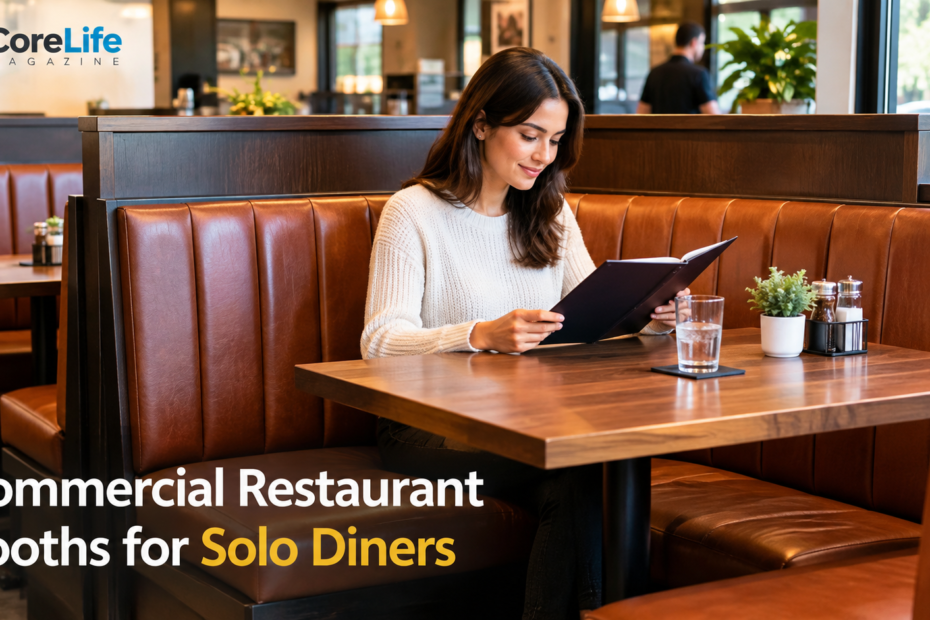
A guest requests a table for one, and the host looks over to the bar. It’s a good suggestion, maybe. It may also miss the booth the guest saw on the way in, with room to settle in, study the menu, and enjoy dinner without being seated next to the busiest conversation.
A dining room with commercial restaurant booths can give solo diners another useful choice when its seating plan allows for them. The question is how to make that choice practical for the restaurant and comfortable for the guest. Start by treating party size as information about the booking, rather than a description of the person’s preferred experience.
A Solo Booking Is Still a Full Visit
Someone eating alone could be traveling, on a lunch break, celebrating discreetly, or simply ordering what they want to eat. The staff needn’t find out why the guest is alone to deliver good service. They need to know what the guest wants right now.
OpenTable reported that solo dining reservations in the United States increased by 8% on its platform in 2024 compared with the previous year. That is platform-specific evidence, not a measure of every restaurant visit. It nevertheless gives operators a reason to examine how their booking and seating arrangements handle a party of one.
See what occurs before the guest arrives. Does the reservation system allow a one-person booking at normal meal hours? Is there a good selection of seating areas available? If online availability differs from actual practice, an eager guest may never get to the restaurant to ask.
Offer a Choice Without Making It Awkward
A simple choice tells staff more than an assumption. Ask if the guest would like the available booth or a seat closer to the activity. Explain any relevant distinction, such as closeness to the kitchen or a quieter portion of the room.
Don’t announce that the booth is too big for the guest within hearing of the dining room. If the restaurant can’t assign it during a particular service, politely explain the available choices. Managers can establish a consistent approach to capacity decisions in the operating plan.
AARP’s discussion of dining alone while traveling presents different ways people approach a solo meal. For a restaurant, the useful takeaway is that preferences vary. A guest who enjoys talking with staff on one visit may want a quiet meal on the next.
Give hosts room to respond to the person in front of them. A script can establish courteous language, but it should not turn every solo arrival into the same conversation.
Make the Booth Usable From a Single Seat
Set the booth with a standard place setting in the position a single guest is most likely to choose. The guest should be able to reach menus, condiments, and payment equipment without sliding along the entire bench or standing up.
Look at the tabletop around the setting. A guest may have a book, a small backpack, or travel documents. That doesn’t imply the restaurant needs to furnish an office, but it should be obvious what space is available and what space must stay free for service.
Think about where the table base sits and how easy it is to get into the booth. A deep seat or awkward approach can be inconvenient for any party size. Suitable alternative seating should remain a normal choice in the restaurant, including for visitors whose access needs are not met by a fixed booth.
Don’t seat single diners at the least comfortable end of a booth simply because the rest of it is unoccupied. The position should work for dining, with adequate reach, light, and space for the meal.
Set Capacity Rules Before the Rush
Allocating a booth to a solo diner has a capacity consequence when demand is high. Pretending otherwise does not help the host. Make the decision using the restaurant’s booking pattern and actual room, then communicate the rule consistently.
Review each service period separately. A booth that has to be kept open for an expected larger party during a crowded service might be a sensible solo choice at other times. Explain limits on booking duration or seating areas before the guest confirms the reservation.
A useful planning discussion covers:
- Which booths can enter the solo booking inventory.
- When availability changes with expected demand.
- Who can approve an exception during service.
- How hosts explain the available alternatives.
Don’t pledge extra income just because solo dining is getting press. Compare the setup to the restaurant’s own reservations, occupancy, spending, and guest feedback. The goal is to make a good seating decision, not to turn a national trend into a prediction for a single booth.
Keep the Service Attentive and Unintrusive
Ask about pacing in the same ordinary way you would for another table. A solo guest may need to leave promptly or may want a leisurely meal. Neither preference can be read from the absence of a companion.
Staff should remain attentive without filling every pause. Offer assistance, explain the menu when requested, and return at appropriate points in the meal. Avoid repeated comments about the person being alone, even when they are meant warmly.
A quick break from the booth also requires a practical response. Determine how staff distinguish an occupied table from a completed visit. Guests need a clear way to tell the server they are stepping away, without leaving their possessions behind as a sign.
Go through the payment experience. A guest may appreciate a quick way to settle when ready, but putting the bill down early can feel like a direction to leave. Time it to the restaurant’s usual service standards and the guest’s expressed wishes.
Record Preferences With Restraint
If the restaurant keeps guest notes, record information that helps deliver the requested service. A preference for a quiet booth can be useful. Speculation about why a person dines alone has no practical place in the record.
The Federal Trade Commission’s guidance on protecting personal information advises businesses to collect and retain only information they have a legitimate need to keep. Apply that discipline to reservation notes, with appropriate access and retention arrangements for the business.
Ask staff to write factual, respectful entries that another employee can interpret correctly. Record a request rather than attaching a personality label. A guest who once asked to read quietly has not agreed to be treated as someone who never wants conversation.
Review the notes when guests update their preferences. A service record should help staff listen, rather than become a reason to stop asking.
Make Room for an Ordinary Pleasure
A booth doesn’t need a special identity to welcome a solo diner. It must be available when the seating arrangement allows it, usable from the chosen position, and backed up with service that respects the guest’s wishes. Those are simple hospitality choices with a direct impact on the visit.
Begin with a small section of the room and see what happens. Listen to visitors and hosts, change the booking rules when evidence supports it, and keep useful choices. A restaurant that comfortably seats a party of one is better able to serve the people who actually show up.